Hearing Aid vs Cochlear Implant | Benefits of cochlear implants
Hearing loss can affect communication, education, work and everyday life. However, with advancements in hearing technology, people with hearing difficulties have access to different solutions. Two commonly recommended options are hearing aids and cochlear implants.
Although both devices help people with hearing loss, they work differently and are suitable for different levels of hearing difficulties. Understanding the difference between a hearing aid and a cochlear implant can help patients and families make informed decisions.
In this guide, we explain hearing aid vs cochlear implant, their benefits, costs, suitability and how to choose the right hearing solution with guidance from an ENT specialist.
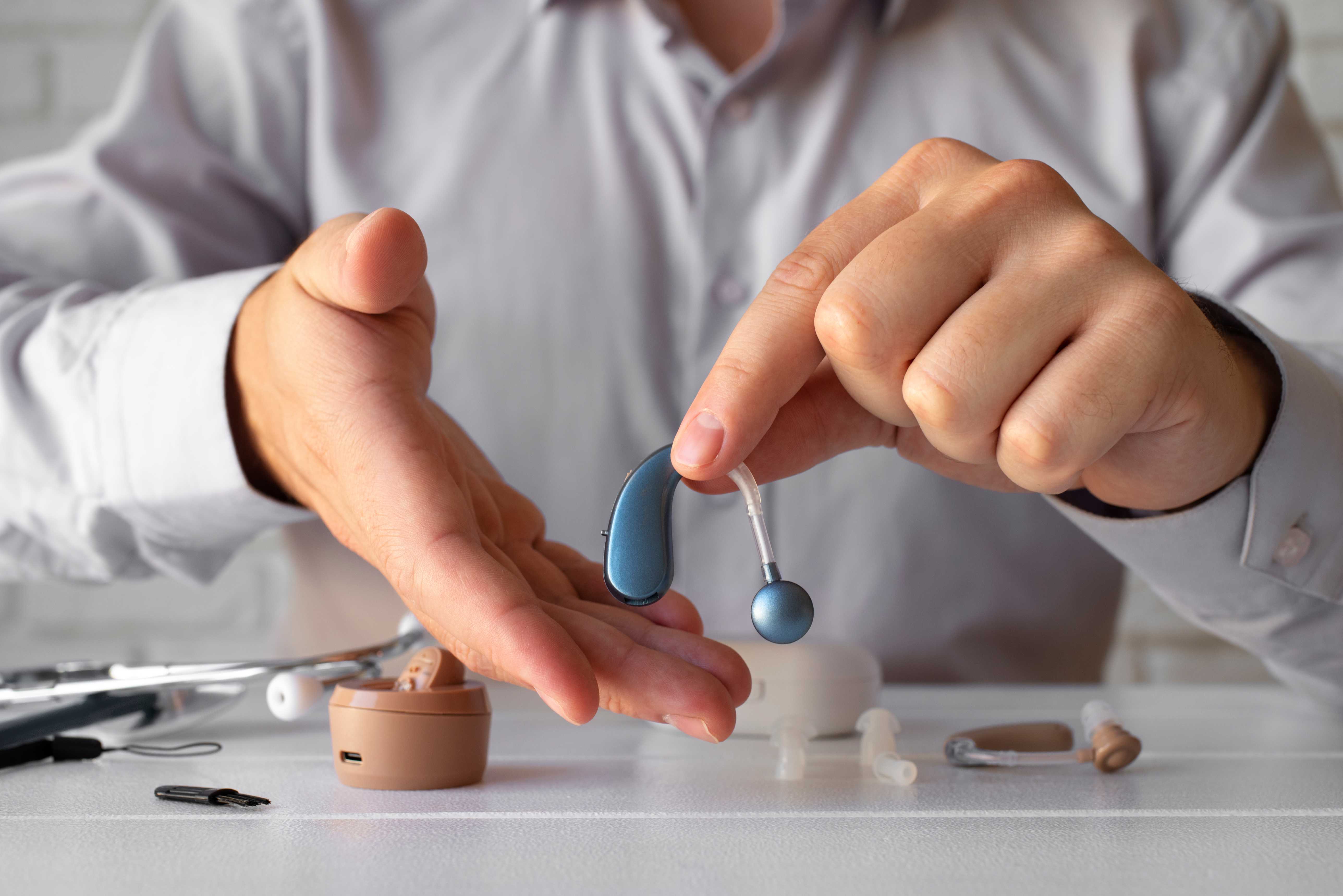
Understanding different hearing solutions can help individuals make informed decisions about hearing care.
What Is a Hearing Aid?
A hearing aid is a small electronic device designed to improve hearing by making sounds louder and clearer. It captures sounds through a microphone, processes them and delivers amplified sound into the ear.
Hearing aids are commonly recommended for people with mild, moderate or severe hearing loss, depending on their hearing assessment.
Some important benefits of hearing aids include:
- Improve the ability to hear conversations and everyday sounds.
- Help people communicate more comfortably.
- Available in behind-the-ear, in-the-ear and other designs.
- Non-surgical and easy to use.
- Can be programmed according to individual hearing requirements.
If you are wondering what is a hearing aid and who should use a hearing aid, an audiologist can evaluate your hearing and recommend a suitable device.
What Is a Cochlear Implant?
A cochlear implant is an electronic medical device designed for people with severe to profound sensorineural hearing loss who receive limited benefit from appropriately fitted hearing aids.
Unlike hearing aids, which amplify sound, cochlear implants bypass damaged parts of the inner ear and directly stimulate the auditory nerve through electrical signals.
A cochlear implant generally consists of two main parts:
- External Component: A microphone, sound processor and transmitter that capture and process sounds.
- Internal Component: A surgically placed receiver and electrode array that deliver electrical stimulation to the auditory nerve.
Some important benefits of cochlear implants include:
- Provide access to sound for suitable candidates with severe hearing loss.
- Improve speech understanding with appropriate rehabilitation.
- Support communication and language development.
- Can help children with hearing loss develop listening and speaking skills.
- May improve everyday communication and social participation.
Understanding what is a cochlear implant is important before considering cochlear implant surgery.
Hearing Aid vs Cochlear Implant: Key Differences
The main difference between hearing aids and cochlear implants is how they help a person hear. Hearing aids amplify sounds, whereas cochlear implants convert sounds into electrical signals that stimulate the auditory nerve.
- Working Method: Hearing aids amplify sound, while cochlear implants convert sound into electrical signals.
- Suitable For: Hearing aids may help different degrees of hearing loss. Cochlear implants are considered for selected severe to profound hearing loss cases.
- Surgery: Hearing aids do not require surgery, whereas cochlear implants require a surgical procedure.
- Main Technology: Hearing aids use sound amplification, while cochlear implants use electrical stimulation.
- Rehabilitation: Hearing aids require fitting and follow-up. Cochlear implants require auditory rehabilitation and training.
- Cost: Hearing aids are generally less expensive than cochlear implants.
Both options can improve communication, but their effectiveness depends on the type of hearing loss, inner ear condition and individual requirements.
Who Needs a Hearing Aid?
A hearing aid may be recommended for individuals who have difficulty hearing conversations, television sounds, phone calls or speech in crowded environments.
You may benefit from a hearing aid if you:
- Have mild to severe hearing loss.
- Can hear sounds but struggle to understand speech.
- Experience difficulty following conversations.
- Have age-related or other types of hearing loss where amplification is beneficial.
An audiologist can conduct a hearing test and determine the appropriate hearing aid.
Who Needs a Cochlear Implant?
A cochlear implant may be recommended for individuals with severe to profound sensorineural hearing loss who do not receive sufficient benefit from hearing aids.
Children born with significant hearing loss and adults who have lost their hearing later in life may also be potential candidates.
The evaluation generally includes:
- Detailed hearing tests.
- Speech perception assessments.
- Medical examination of the ear.
- Imaging tests when required.
- Assessment of suitability for surgery and rehabilitation.
Not everyone with hearing loss requires a cochlear implant. A specialist evaluation is essential.
Hearing Aid vs Cochlear Implant: Which Is Better?
When comparing hearing aid vs cochlear implant, there is no single solution that is better for everyone.
Hearing aids are generally preferred when the inner ear can still benefit from amplified sounds. Cochlear implants may be more suitable when damage to the inner ear prevents sufficient benefit from hearing aids.
The right choice depends on several factors:
- Degree and type of hearing loss.
- Age and overall hearing health.
- Speech understanding ability.
- Medical suitability.
- Expected benefits and rehabilitation requirements.
An ENT specialist and audiologist can help identify the most appropriate option.
Hearing Aid and Cochlear Implant Cost in India
The cost of hearing solutions in India varies depending on the technology, manufacturer, device features and treatment requirements.
- Hearing Aid Cost in India: Prices can range from a few thousand rupees to several lakhs, depending on the model, technology and level of hearing support.
- Cochlear Implant Cost in India: The overall expense can range from several lakhs to over ₹10 lakh, depending on the implant system, surgery, hospital charges and rehabilitation requirements.
Before choosing a device, patients should discuss the complete treatment cost, maintenance expenses and available financial assistance with their healthcare provider.
Can a Cochlear Implant Restore Normal Hearing?
A cochlear implant does not restore natural hearing. Instead, it provides an alternative way for the brain to receive sound information.
Initially, sounds may feel unfamiliar. With consistent use, programming sessions and auditory rehabilitation, many recipients gradually improve their ability to recognise sounds and understand speech.
The results vary depending on factors such as age, duration of hearing loss, previous hearing experience and rehabilitation participation.
How to Choose the Right Hearing Solution?
Choosing between a hearing aid and cochlear implant requires proper medical assessment rather than personal preference.
Consider these important steps:
- Schedule a consultation with an ENT specialist.
- Complete the recommended hearing tests.
- Understand the type and severity of hearing loss.
- Discuss suitable treatment options with an audiologist.
- Compare device features, costs and long-term requirements.
- Follow the recommended treatment and rehabilitation plan.
Frequently Asked Questions
Frequently Asked Questions About Hearing Aid vs Cochlear Implant
For severe hearing loss, hearing aids may help some individuals, while others may benefit more from cochlear implants. The choice depends on hearing test results and speech understanding. An ENT specialist can assess suitability.
Yes, selected individuals who receive limited benefit from hearing aids may be suitable for cochlear implants. However, cochlear implant candidacy requires detailed medical and audiological evaluation.
Hearing aids can cost from a few thousand rupees to several lakhs. Cochlear implants may cost several lakhs or more than ₹10 lakh. The final cost depends on the device, hospital and treatment requirements.
Cochlear implant surgery is an established procedure, but like any surgery, it carries certain risks. A specialist will explain the possible complications, benefits and recovery process before treatment.
The implant is generally activated after the surgical site has healed, often around 2–4 weeks after surgery. Hearing improvement develops gradually through processor adjustments and regular auditory rehabilitation.
Yes, children with severe to profound hearing loss may benefit from cochlear implants if they meet the medical criteria. Early diagnosis, timely treatment and consistent rehabilitation are important for speech and language development.
Take the Right Step Towards Better Hearing Understanding your hearing condition and available treatment options can help you make informed decisions. Consult an ENT specialist and audiologist for an appropriate hearing assessment and personalised guidance.
Get Professional Guidance for Hearing Loss
If you or a family member is experiencing hearing difficulties, Vijay ENT Endoscopy Center can be approached for information about ENT consultation, hearing evaluation and available hearing treatment options.
Book Your ENT Consultation